Can you automate without changing the racking?
Yes, if the racking is in good condition and the aisle and heights suit the right model.
An automated warehouse needs its own structure and works; the autonomous forklift uses the racking you have and is added one unit at a time.
What it is
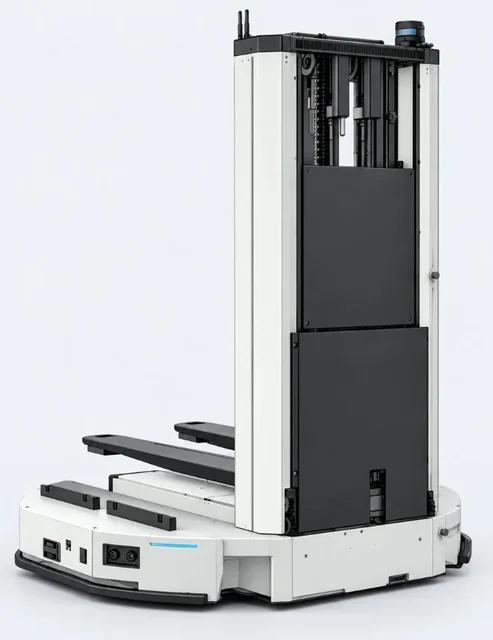
An autonomous forklift, also called a robotic or automatic forklift, forklift AGV or VFR, is a fork-lifting machine that finds its own way, with a laser that maps the warehouse or by reading codes on the floor. It belongs to the same family as AGVs and AMRs, but besides moving the pallet it lifts it to a rack level and stores it.
Keep reading
It works on selective racking, where every position faces an aisle.
In practice
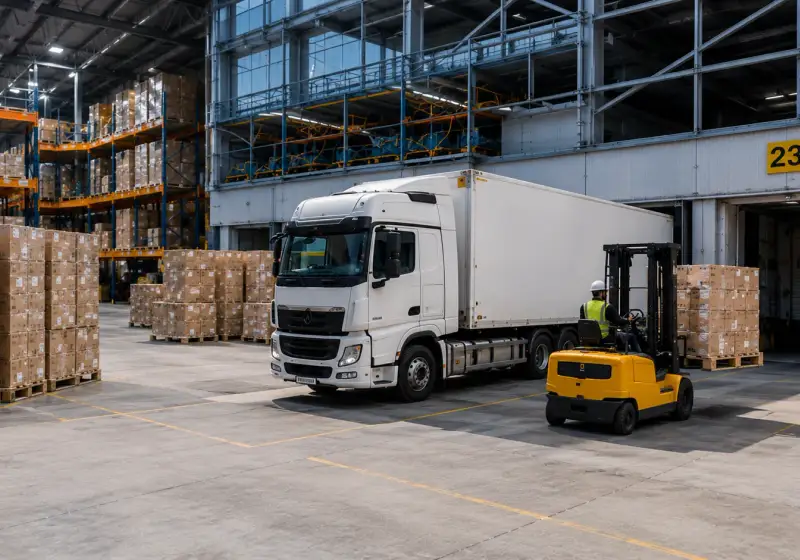
An autonomous forklift drives itself: it travels the warehouse, enters the aisle, lifts the pallet and places it in its position. It needs no rails or new structure, and it works alongside driven equipment during the transition.
What is an autonomous forklift, and how is it different from an AGV?
Two series that split the work
The transport and storage series carries up to 1,000 kg per pallet and lifts between 2,200 and 5,000 mm depending on the model. It covers the whole warehouse: it picks pallets off the floor at goods-in and sets them on a conveyor, at a picking station or in the racking.
Keep reading
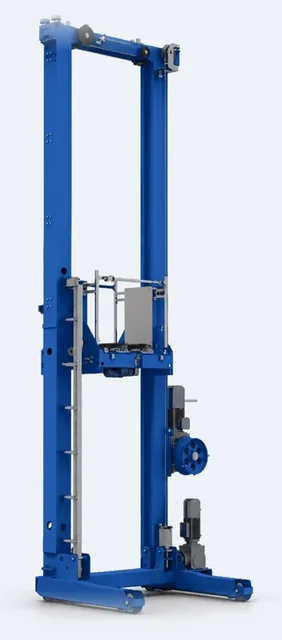
The turret series carries up to 1,500 kg and lifts up to 6,300 or 9,300 mm, depending on the model. It stays inside its aisle and receives the pallet at a transfer point, which can be a table at the aisle end or the lowest racking levels. When the beams are higher than the transport series can reach, both work together: one does the long runs and the other the upper levels.
What is checked in the building, who measures it and when
Everything is measured during the survey, before quoting. Usable height is taken to the lowest obstruction —beam, sprinkler, light fitting— and the support height of the top beam is compared with the model’s lift, not the height of the upright.
Keep reading
The robot’s full route is walked to confirm its body clears doors, ducts and mezzanines. The floor has to be clean and dry, with joints and cracks checked along the whole route. Floor load capacity and flatness are set by the manufacturer of the chosen equipment and verified by a licensed engineer; if a value falls short, the alternative is local reinforcement, another route or another model. Winter and summer building temperatures, wireless coverage and the heaviest pallet of each product family are also checked.
The system is more than the robot
What gets installed is a set: the robots, the existing or adapted racking, battery charging stations, transfer points, the map with its speed zones and traffic rules, the fleet manager and the link to your company software. The fleet manager assigns tasks, resolves crossings and decides which robot charges and when, using the gaps in the operation.
Keep reading
Charging stations sit close to the usual routes but out of traffic aisles, so a charging robot never blocks another. A quotation that covers only the robots covers half the system.
How it connects to the software you already run
The warehouse management system (WMS) decides what goes to each location; the company system (ERP) sends the orders; the fleet manager turns those orders into trips. STOKA does not impose a WMS: it adapts to the one your company already uses and integrates the robots with it, through the equipment control system (WCS) and its interfaces.
Keep reading
With direct access to every pallet, lot rotation stops depending on the layout: the system always releases the right lot.
Sharing the floor with people and driven forklifts
The robots comply with ISO 3691-4, the international safety standard for driverless industrial trucks, and carry a laser scanner, a 3D camera, bumpers and an overload sensor. That covers the vehicle, not the traffic: STOKA designs the circulation in every project.
Keep reading
There are three ways to share space, from simplest to most demanding: separate zones with a transfer point on the border, separate shifts, or shared space with strict rules and reduced speeds. A common first stage keeps the operator on a driven turret truck inside the aisle and gives the robot the outside transport.
What is an autonomous forklift, and how does it work?
It is the same machine a driver operates today, with forks, mast and battery, plus what the driver used to provide: sensors to see, a navigation system to know where it is, and software that tells it what to do.
Each move starts in the warehouse management system (WMS), which picks the slot; the fleet manager assigns the robot and the route. The truck locates itself with a laser that reads the building outline, or by reading floor codes, finds the pallet pockets with its sensors, lifts to the right beam level, checks that the slot is free, sets the pallet down and confirms. Inventory is updated at that moment.
Keep reading
In Spanish-speaking markets it is called autoelevador autónomo, montacargas autónomo or grúa horquilla autónoma; the industry also knows it by the acronym VFR.
Autonomous forklift vs AGV, AMR and stacker crane
All four move loads without a driver.
An AGV (automated guided vehicle) follows a fixed path and transports. An AMR (autonomous mobile robot) also transports, but builds its own map and reroutes in software. The autonomous forklift belongs to the same family and adds what the other two do not: it lifts the pallet and stores it on a beam level of the existing racking.
Keep reading
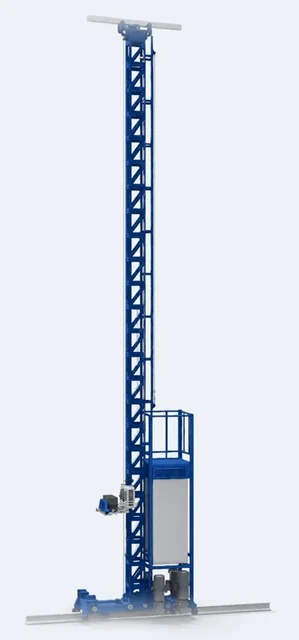
A stacker crane is a different scale: a crane that lives in its own aisle, in racking built for it, with more density and throughput in exchange for new structure. That is why the autonomous forklift is usually the first step, and the stacker crane AS/RS a later stage when volume justifies it.
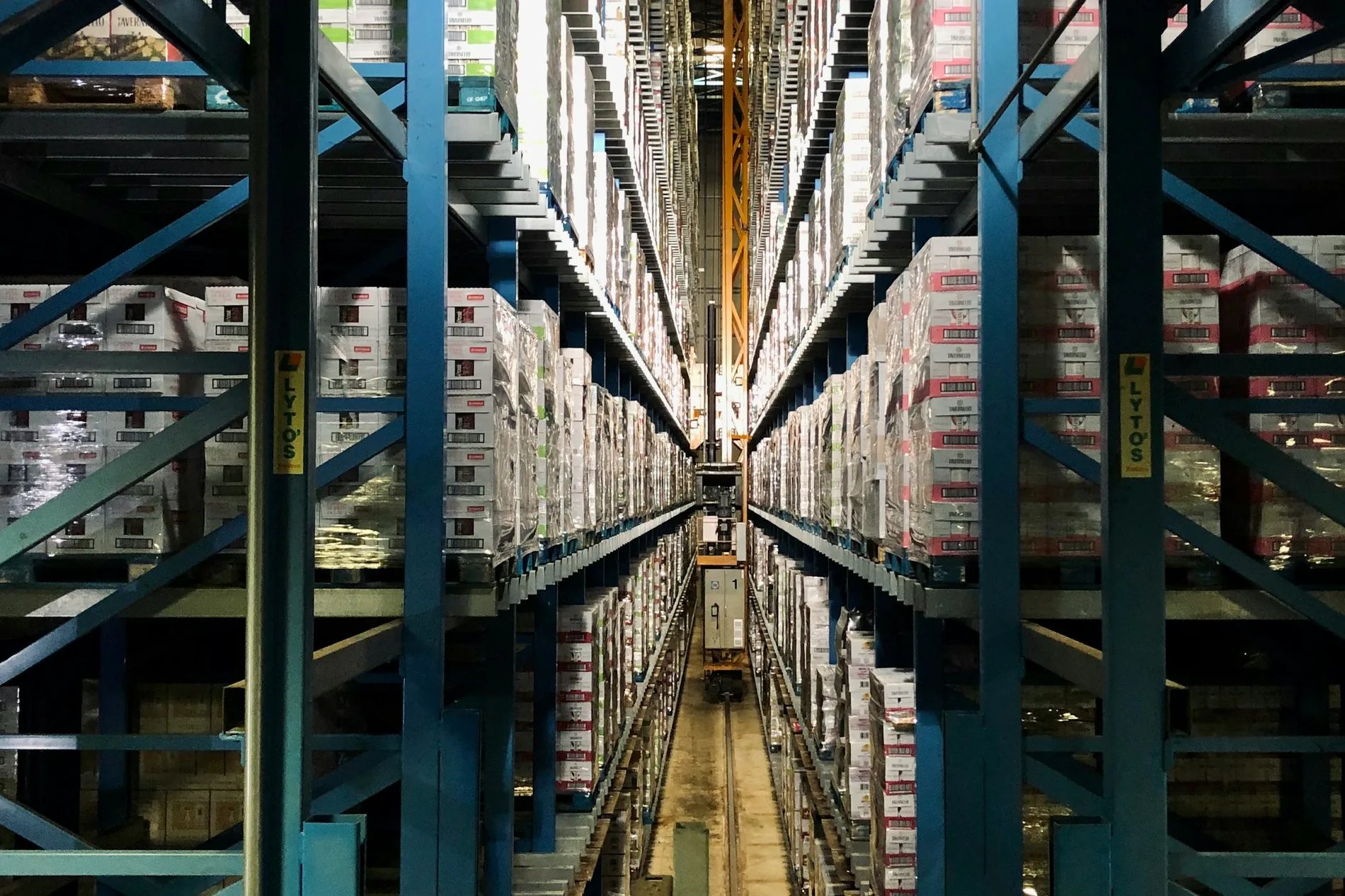
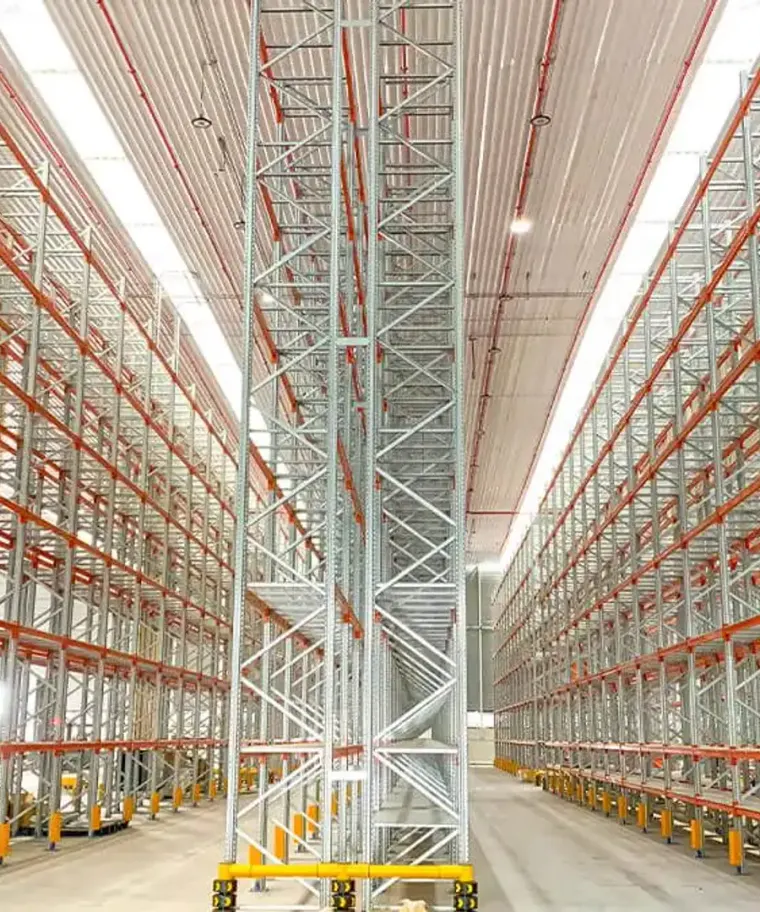
The racking it works on: your selective racking, measured
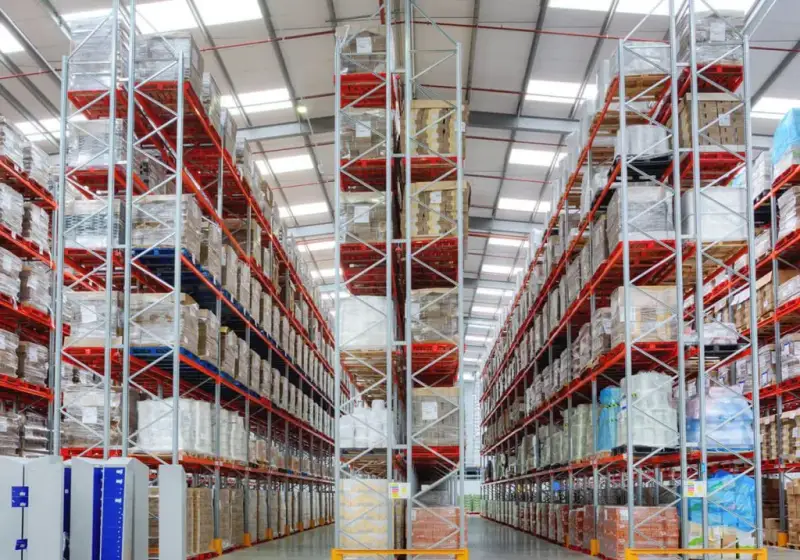
The autonomous forklift works on selective racking, where every pallet faces an aisle.
Three things are needed to use what you have. The aisle must suit the right series: STOKA designs with 2.00 m for the transport series, 2.10 m for the mid-height model and 1.80 m for the turret series. These are not catalogue values but our own criterion, because the pallet rides ahead of the axis on the forks and, turning loaded, sweeps a wider circle than the robot.
Keep reading
The top beam must be within the model’s lift. And the structure must be sound. With the aisle measured there are three outcomes. If it is wide enough, the robot goes in without touching anything. If it is narrower than the transport criterion but suits the turret series, that aisle becomes a turret aisle and the transport series works outside. If it is narrower still, rows have to move, and other technologies are worth comparing again.
Where it fits in a staged automation project
On the path from organising to equipping, mechanising and automating, the jump from equipping to automating is the hardest: a stacker crane or a shuttle block needs new structure, building work and a transition with the warehouse half done.
The autonomous forklift breaks that jump into small steps: the selective racking is already there, one or two robots take over one specific run, the rest keeps working with driven trucks, and robots, aisles or functions are added once the first stretch works. What we do not promise is that any racking installed today will accept robots tomorrow: that depends on aisles, beams, structural condition and model, and engineering validates it case by case.
Warehouse automation: when it pays and which technology fits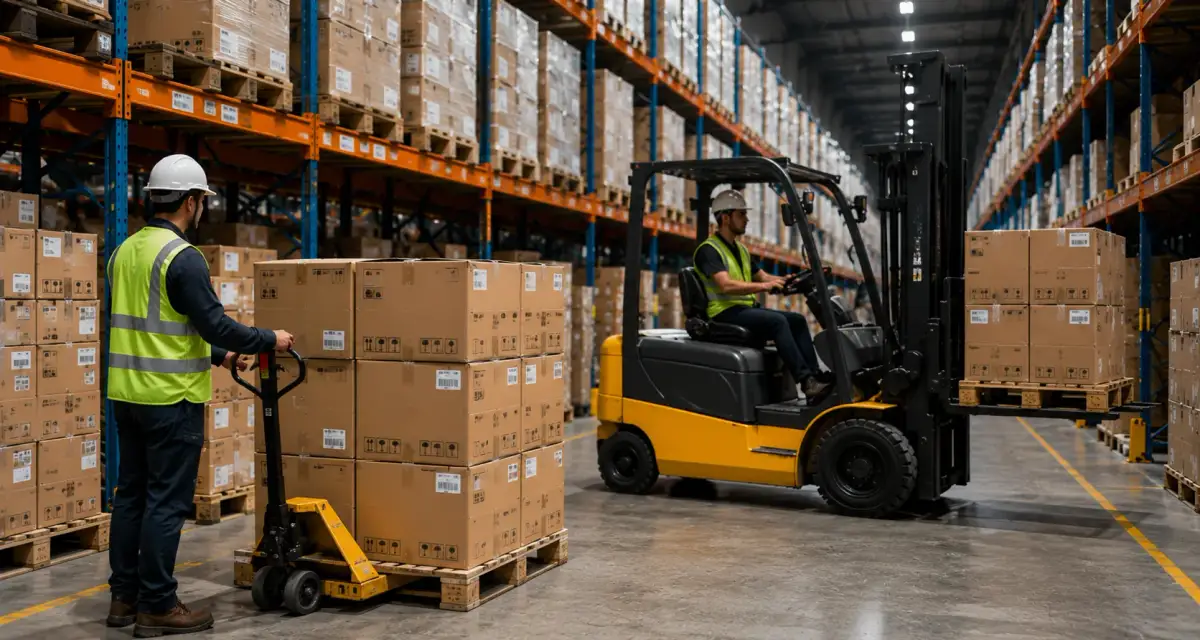
What decides whether an autonomous forklift suits your warehouse?
We do not publish model-by-model specification tables: the detailed sheet comes with the assessment, sized against your operation. These are the criteria the choice is made on.
Aisles, beams and racking condition
The measured aisle against each series’ design criterion, the top beam’s support height against the model’s lift, and racking without damaged uprights, with locked beams and anchored base plates. Damaged racking is repaired before automating.
Pallet weight and type
Up to 1,000 kg the whole family fits; above that and up to 1,500 kg only the turret series remains, and it does not pick from the floor, so another machine does the transport. The transport series takes open pallets; a pantograph model handles closed ones.
Temperature and floor
It works indoors only, between 0 and 40 °C, on a clean, dry floor. A sub-zero cold room or an area that gets washed stays outside its zone, unless a transfer point on the boundary solves it.
Peak movements, origin and destination
The number of robots comes from simulating the busiest window, not the daily average. If many movements concentrate on one fixed run, a conveyor or a rail-guided vehicle performs better than a fleet queuing at crossings.
The density you need
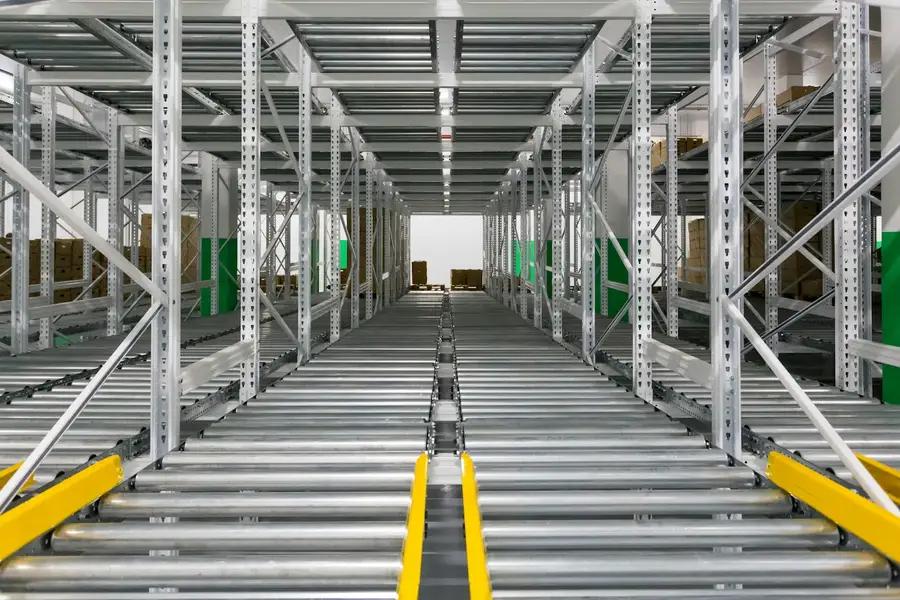
On selective racking every pallet has its own aisle: the robot gives direct access, not density. If space is short with few products holding many pallets each, the answer is deep-lane storage, and the robot can feed that block.
When is an autonomous forklift the wrong answer?
Not in cold storage: it works between 0 and 40 °C, and in a freezer the conversation is different.
Nor with pallets over 1,500 kg, nor on floors with permanent water or oil. If the problem is density, it does not solve it, because it stores in racking with an aisle per position. And if locations are not coded, order comes first.
Frequently asked questions
Can't find your question?Write to us and we reply within one business day.
Tell us about your case01Is an autonomous forklift the same as an AGV?
It belongs to the same family, mobile robotics, but it does a different job. An automated guided vehicle or an autonomous mobile robot moves loads between points in the warehouse. The autonomous forklift also lifts the load and stores it on a racking level, on the selective racking that already exists, with no rails or structure of its own.
02What is a forklift AGV or VFR?
It is another name for the autonomous forklift on this page: a driverless forklift that navigates on its own, picks up the pallet and stores it on the racking following the warehouse software. Forklift AGV, robotic forklift, automatic forklift and VFR all describe the same family of machines.
03Why is it usually the first step in warehouse automation?
Because it automates on the selective racking you already have, with no rails or new structure, and it is added one or two units at a time on the route that matters most. Engineering checks your aisles, top beam and racking condition first: not every installed rack accepts robots as it stands.
04Can I use it with my existing racking?
In many cases, yes, and that is its main advantage. It is checked during the survey: the real width of every aisle against the criterion of the right series, the height of the top beam against the model’s lift, and the condition of the structure. If the aisles are wider than needed, re-spacing rows may gain positions.
05Does it work in a cold store?
No. It works indoors only, between 0 and 40 °C. Frozen storage calls for systems designed for the cold, such as shuttle robots that run down to −25 °C. The autonomous forklift can work in an ante-room or a climate-controlled dispatch area, provided the real temperature there is within its range and the floor stays dry.
06How many robots does my operation need?
The number comes from simulating your real movements at the busiest time: where every pallet goes, along which route, how long it waits at crossings and how long each robot spends charging. Until that simulation exists we do not give a figure. The usual start is one or two robots on the run that costs most today.
07How long does commissioning take?
In automation projects, commissioning takes 3 to 4 months as a general reference. The timeline for your project is set in the proposal, according to scope, equipment import and any work the building needs. Mapping and testing are done zone by zone, with the warehouse still running.
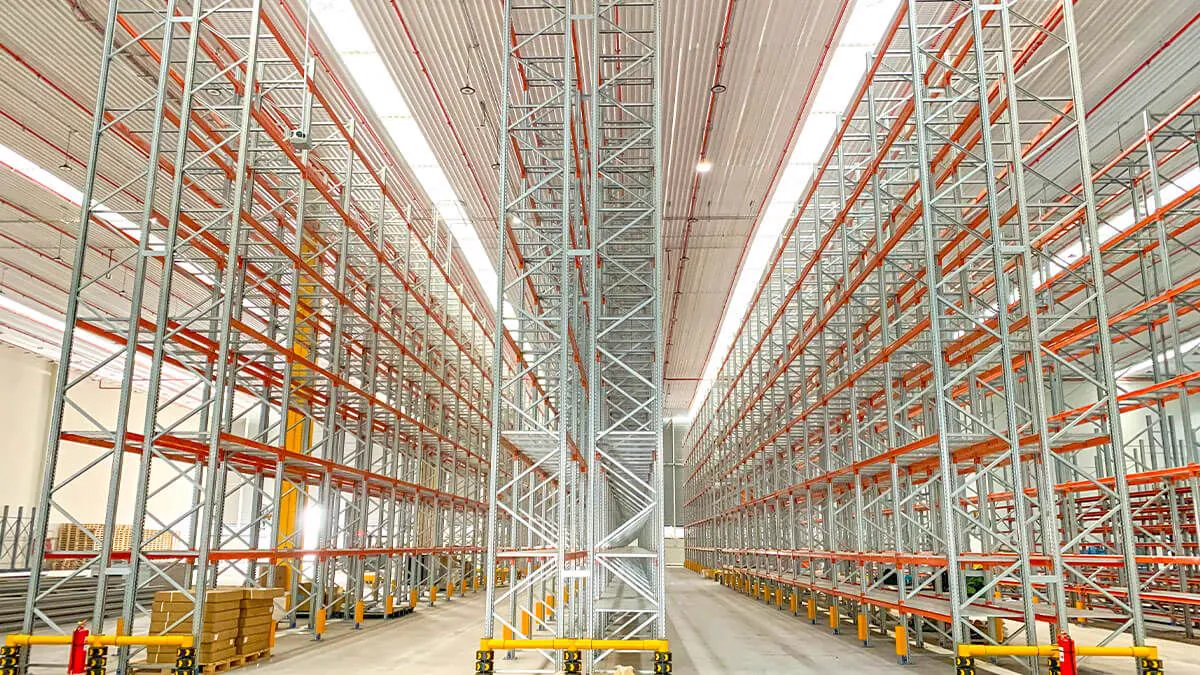
Measure the racking beforetalking about robots
During the survey we measure aisles, beams, clear height and floor, weigh the heaviest pallets and count peak movements. Then we tell you which series fits, how many robots the simulation calls for, and whether another technology suits you better.