
The challenge
When one part is missing, everything stops.
In mining and in oil and gas the cost of not having far exceeds the cost of having. Thousands of very slow-moving references, many of them critical, in operations where resupply is not immediate: the inventory logic is the inverse of everywhere else.
"A part that moves once every two years can be the one that stops the whole site. The criterion is not how often it moves: it is what happens if it is missing."
Before & after
Without automation
- Thousands of very slow-moving references sharing space with a few fast ones.
- Organizing by part number or by supplier, when what rules is criticality.
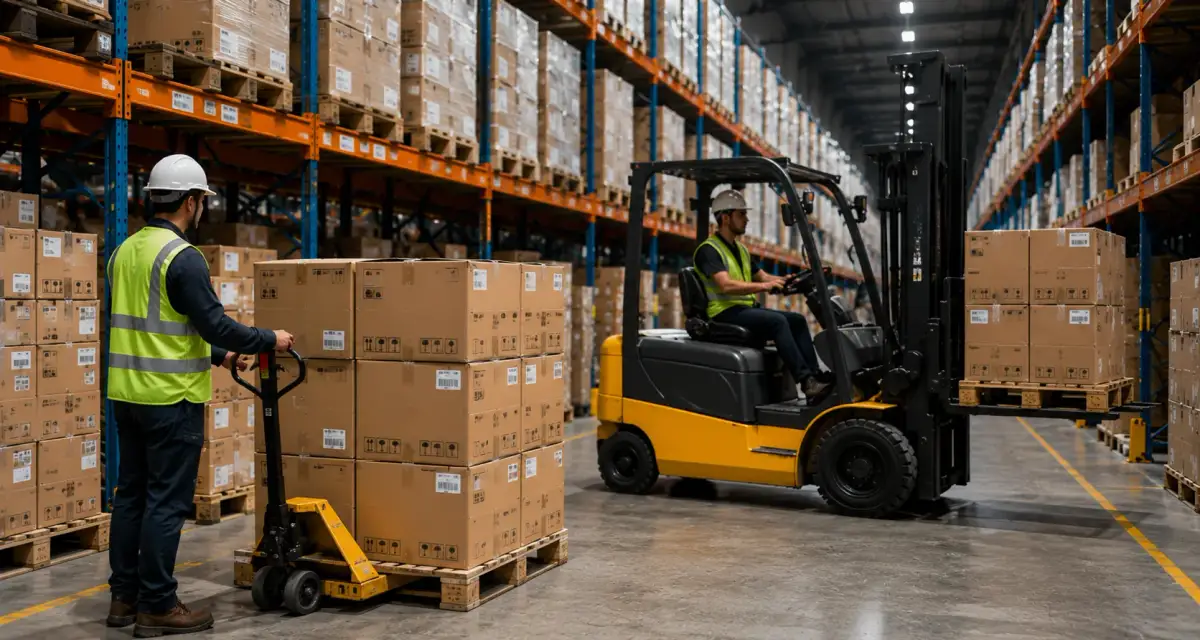
- Formats ranging from a bolt to a several-meter component in the same warehouse.
- Harsh ambient conditions that punish both equipment and people.
- Stock that does not match and gets resolved by recounting, without knowing where the record broke.
With STOKA
- Classify by criticality and rotation before touching the layout, and locate according to that classification.
- Separate by format: small high-value, medium, and oversized have different answers.
- Record retrieval at the moment, so an inventory discrepancy has a traceable cause.
- Concentrate small high-value parts in vertical storage with controlled access.
- Accept that for oversized parts the answer is usually layout rather than automation.
Why automate
Key benefits
- Organized by criticality, not by part number.
Location, counting, and replenishment decided by what happens if the part is missing, rather than by its part number or who supplies it.
- Location accuracy.
The part is where the system says it is. In a warehouse of thousands of barely-moving references, finding it matters more than finding it fast.
- Extreme formats, each in its place.
From a bolt to a several-meter component: separate by format instead of forcing one criterion that suits almost nothing.
- A record of who retrieved what.
Movement traceability on high-value parts, which is what lets you know why stock does not match before recounting everything.
Automation context
Warehouse automation in mining, oil and gas
The warehouse of a mining operation or an oil and gas site is measured by a different question than the rest. Not by orders picked per hour, and not by rotation: by whether the part is there and can be found when the equipment has stopped. Everything else — order, density, travel — comes after that one.
That inverts the inventory logic that governs almost every other sector. In a consumer warehouse, stock that does not rotate is tied-up capital and the goal is to reduce it. Here, overstock of certain parts is a deliberate decision about acceptable risk, because the cost of not having far exceeds the cost of having. What remains a mistake, and an expensive one, is not knowing what you have or where it is: that is not an inventory policy, it is a loss of control.
The requirement shaping the design is operational, and it is that criticality rules over rotation. A part that moves once every two years can be the one that stops the whole site, so location, counting, and replenishment are organized by what happens if it is missing, not by how often it goes out. That is precisely the inverse of the other six sectors, and it is what makes this page different. Where hazardous substances are involved there is also a regulatory layer, which exists and which we do not describe here: the applicable standards are national, and we handle them on the coverage pages, where we can say which one applies and where.
Keep reading
The physical constraint is format. The same warehouse holds a bolt and a several-meter component, and often the ambient conditions of an open-pit or remote operation, which punish both the equipment and the people working in it. Forcing a single storage criterion across that range of sizes guarantees it suits almost nothing: the small gets lost and the large does not fit.
The process carrying the most weight is location accuracy. It sounds less ambitious than speed and it is what actually defines this warehouse: with thousands of references that barely move, the problem is never that picking is slow, it is that nobody finds what they are looking for. And the difference between inventory that matches and inventory that does not depends on whether retrieval is recorded at the moment it happens.
The typical mistake is organizing by part number or by supplier. It is what comes naturally when a warehouse grows by accumulation: each purchase gets stored near whatever came with it. The result is a warehouse organized by an administrative logic that has no relationship to urgency. What works is classifying first by criticality and rotation, and only then deciding where each class goes.
It is worth saying how criticality gets decided, because that is the part the warehouse cannot solve alone. The list does not come from inventory: it comes from maintenance and operations, who know which equipment cannot stop, which part has no substitute at hand, and which can be sourced locally. The warehouse's work starts afterward, once that classification exists: translating it into locations, counting frequency, and replenishment policy. Skipping that step is what produces immaculately organized warehouses following a criterion nobody uses in an emergency, and it is why this assessment is done with maintenance at the table and not only with the warehouse manager.
There is a second quiet problem in this sector: inventory that does not match and gets resolved by recounting. Recounting restores the number and destroys the information — you learn what you have, never where the record broke. Recording retrieval at the moment, with who took what, turns a discrepancy into something with a traceable cause, and that is worth more than the count itself.
What improves at each step. Ordering means classification by criticality, separation by format, location criteria, and recording retrieval at the moment. Nothing is purchased and accuracy rises. Equipping adds the structure each format needs — not the same for a bolt and for a long component — and management software that holds location. Mechanizing appears when handling large or heavy parts is the bottleneck or the risk. Automating enters where the profile allows, and that is not the whole warehouse.
When automation makes sense, specifically in this sector. The honest answer is: in parts, and not everywhere. Small high-value items are the best possible case for vertical storage with access control and recording, because they concentrate many references in little floor and because a record of who retrieved what is exactly what this warehouse lacks. For oversized parts, by contrast, the answer is almost always layout, handling equipment, and access, and proposing an automated system there would be selling what does not fit. A well-framed project in this sector is usually mixed, and it is better to say so from the start.
A note about distance, because in this sector it always comes up and the honest answer is uncomfortable: STOKA has a single base, in Mendoza, and evaluates projects across Latin America remotely, with the operation's data, traveling when the project justifies it. We do not promise arrival times to site or permanent on-site assistance, because we do not have the structure to sustain it and a promise like that fails on exactly the day it matters.
On resupply times and critical-spare availability levels we publish no numbers. We do not have them verified and they depend on the part, the origin, and each operation's logistics. What can be done, and what changes the outcome, is deciding with data which parts cannot wait and designing the warehouse so those are always locatable.
Recommended equipment
Products for this sector
FAQ
Frequently asked questions about automation
Why organize by criticality rather than by rotation?
Because in this sector the two do not coincide. A part that moves once every two years can be the one that stops the entire site, and one that moves weekly may be available anywhere. Organizing by rotation leaves the critical part in the worst spot in the warehouse, which is exactly where it should not be.
Is carrying extra stock a mistake?
Not necessarily here. In most sectors overstock is tied-up capital; in mining and in oil and gas it is a deliberate decision about what risk is acceptable. What is a mistake is not knowing what you have or where it is, which is a different thing from having extra.
Can a warehouse with such different formats be automated?
In parts. Small high-value items are the case where vertical storage with access control pays off most. For oversized parts the answer is usually layout, handling equipment, and access, not automation, and we would rather say so than propose a system that does not fit.
How long does resupplying a part to a remote site take?
It depends on the part, the origin, and each operation's logistics, and we do not publish a range because we do not have a verified one. What can be done is classifying which parts cannot wait and designing the warehouse so those are always locatable.

Ready to automate?
Free consultation. Response within 24 business hours.
Our technical team analyzes your operation and proposes the most suitable solution with no commitment.