
The challenge
The square meter you pay for twice.
Cold chain is not a sector: it is a technical condition that applies to food, health products, and chemicals. What makes it unique is the economics: every refrigerated cubic meter is paid in rent and again in energy, every day.
"Densifying a cold room does not cut one cost: it cuts two, and both are paid every day."
Before & after
Without automation
- Sizing the chamber by floor area instead of by refrigerated volume.
- Leaving the transit area and loading dock outside temperature control.
- Frequent door openings that let heat in and force recovery.
- People working full shifts at low temperature.
- Conventional equipment not specified to operate in cold.
With STOKA
- Size by refrigerated volume rather than by square meters of floor.
- Gain height before floor: it is what most reduces the volume to cool per pallet.
- Include the loading dock and transit area in the design, not just the chamber.
- Reduce the number of openings and the time the door stays open.
- Choose the system by the temperature range the operation actually needs.
Why automate
Key benefits
- Less volume to cool per pallet stored.
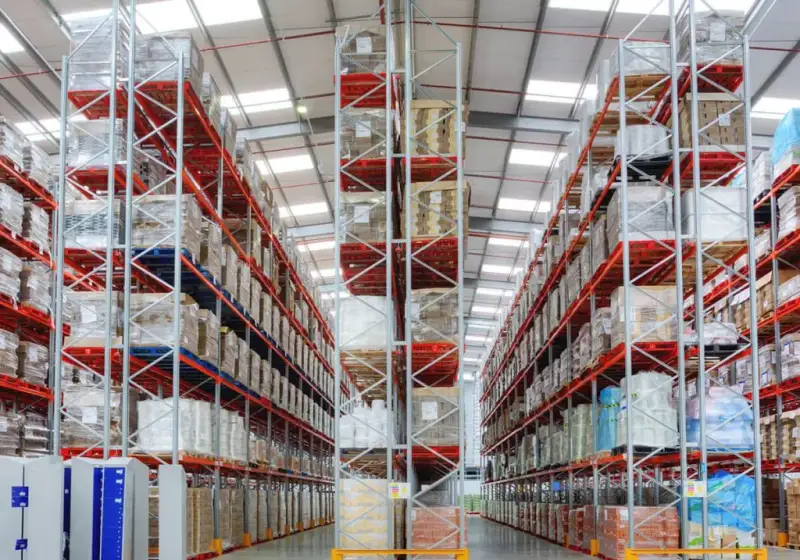
Using height reduces the refrigerated volume needed for the same amount of product, and that volume is what the energy bill pays for.
- Fewer door openings.
Every opening is heat coming in. A system working inside the chamber reduces traffic of people and equipment between inside and outside.
- Fewer person-hours at low temperature.
Nobody should spend a shift working at freezing temperature. It is a working-conditions improvement before it is a productivity one.
- Chain control at the edge.
Covering the loading dock and the transit area as well, which is where the chain actually breaks.
Automation context
Warehouse automation in cold chain
It is worth starting with what this page is not: cold chain is not a sector. It is a technical condition cutting across several — food, health products, chemicals — and it changes warehouse design more than the industry the product belongs to. That is why it has its own page: two operations with nothing in common can share the same problem if both work in temperature.
What makes it unique is the economics. In any warehouse, space costs what the square meter costs. In a cold room, the volume that square meter encloses also carries an energy cost paid every day of the year. It is the same floor area billed twice, and that changes the arithmetic of every decision: densifying stops being a utilization improvement and becomes a cut in two simultaneous costs.
The constraint is set by the equipment, not by the environment. Every system has its operating temperature range: stacker cranes reach −30 °C and shuttle robots reach −25 °C. That is an equipment figure, which is why the number never travels alone: saying "down to −30 °C" without saying with which system informs nothing, because not every system gets there.
Keep reading
The requirement shaping the design is operational, and it is that the chain cannot be broken and breaks at the edges. Inside the chamber the temperature holds on its own; what breaks it is transit: the loading dock, the door left open, the pallet waiting for the truck. From that comes the rule that organizes the design: control has to cover the whole path and not only the refrigerated volume. There is also a regulatory and client-audit layer covering storage, temperature logging, and refrigerated transport, which exists and which we do not describe here because it is not verified in our data bank.
So the process carrying the most weight is not storing: it is holding temperature across the whole path, including the moment product enters and leaves. A warehouse can have an impeccable chamber and lose product during the twenty minutes it spends on the dock.
The typical mistake comes in two shapes and both are about sizing. The first is sizing by floor area instead of by refrigerated volume: you calculate how many square meters are needed and pay to cool the air above the product, every day. The second is leaving the transit area outside temperature control, which is treating the edge as if it were not part of the chain, precisely where the chain breaks.
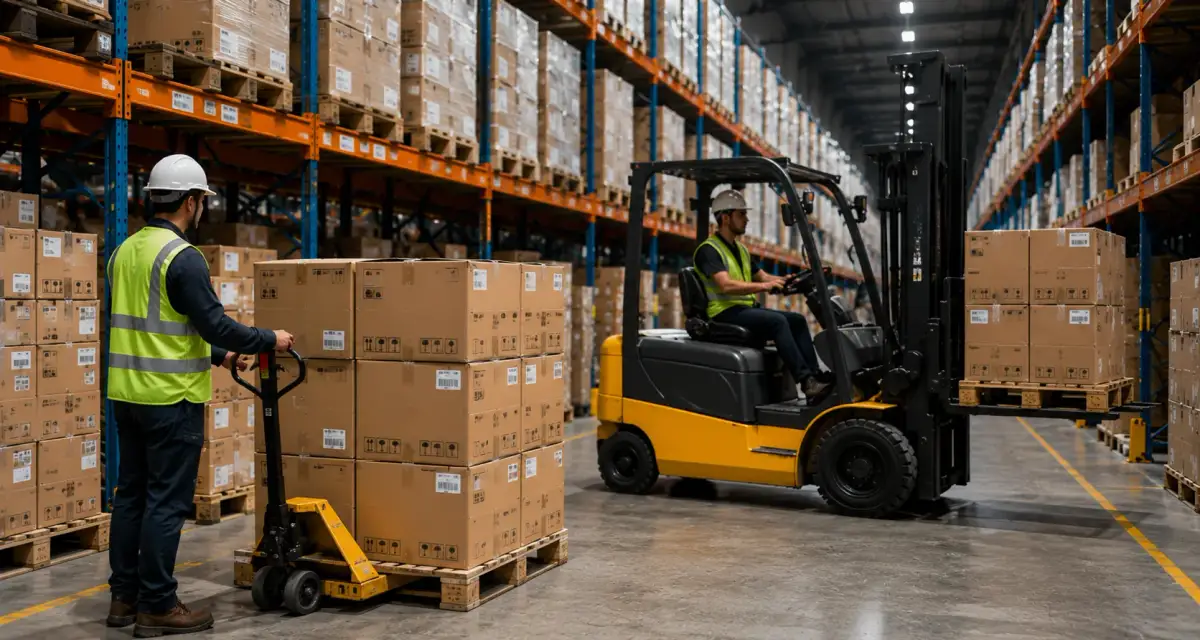
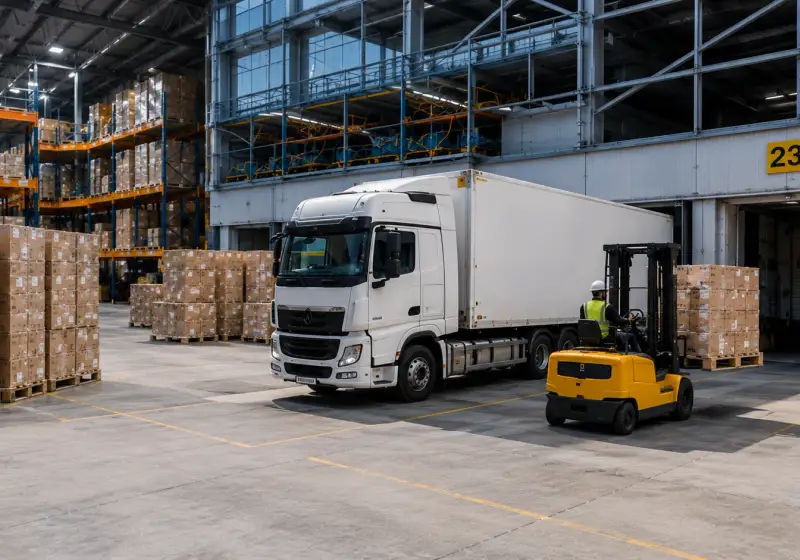
The dock deserves a closer look, because that is where almost everything gets decided. A pallet leaving the chamber and waiting on an uncontrolled dock is losing chain even if nobody logs it, and the same happens in reverse with what arrives. The fixes are not all about equipment: a dock seal against the truck, an airlock to buffer the transition, or simply resequencing so product does not leave until the transport is in position, all change the outcome without buying a system. What does not work is designing the chamber with precision and leaving the edge to however it happens to go, which is exactly what we find in most operations we review.
There is also a constraint that shows up late if nobody raises it early: not all equipment is specified to work in cold. Batteries lose capacity, lubricants behave differently, condensation appears wherever there is a thermal transition, and steel that performs well at ambient temperature may not be rated for freezing. Choosing equipment by its rated operating range rather than by its ambient-temperature specification is what separates a chamber that works from one that degrades through its first winter.
What improves at each step. Ordering, in cold, pays off immediately: reducing the number of door openings and the time they stay open, reorganizing so travel inside the chamber is minimal, and reviewing how product is handled on the dock. Nothing is purchased and consumption drops. Equipping adds structure specified to operate in cold, which is not the same as in an ambient warehouse. Mechanizing reduces traffic of people and equipment between inside and outside. Automating is the step where the chamber stops needing people inside it.
When automation makes sense, specifically in this sector. When the cost of operating the chamber — energy, losses from openings, working conditions — weighs more than the cost of storing the product. An automated system in cold does three things at once that in an ambient warehouse would do only one: it reduces the volume to be cooled per pallet stored, it reduces openings and traffic, and it takes people out of an environment where nobody should spend a full shift. That last point is not incidental. Working at freezing temperature carries time limits, breaks, and equipment requirements that constrain the productivity of any manual operation, and a significant part of the case for cold automation is explained there before it is explained by savings.
On energy savings we publish no percentages and no consumption comparisons between an automated chamber and a manual one. It depends on volume, temperature range, insulation, and each operation's working pattern, and a general number would be invented. What can be done is measuring your chamber's current consumption and estimating on that data, which is part of the assessment.
If what you are looking for is how the food business organizes itself — high rotation, lots, expiry dates, and shipping by date — that is a different thing and it is on its own page. Here we cover the thermal condition, which is what food, health, and chemicals share when they work in cold.
- −30 °CStacker cranes
- −25 °CShuttle robots
- No staffInside the chamber
Recommended equipment
Products for this sector
FAQ
Frequently asked questions about automation
Why does densifying pay off more in cold than in an ambient warehouse?
Because in a chamber space is paid for twice. The square meter has its rent, as in any warehouse, and the volume that comes with it carries an energy cost every day. Reducing the refrigerated volume needed for the same amount of product cuts both at once.
How low can an automated system operate?
It depends on the system. Stacker cranes reach −30 °C and shuttle robots reach −25 °C. That is an equipment figure and not a general property of cold storage: which is why the range is always stated together with the system that reaches it.
Where does the cold chain break?
Almost never inside the chamber, where temperature holds on its own. It breaks at the edges: the loading dock, the open door, the pallet waiting for the truck. That is why control has to cover the whole path and not only the refrigerated volume.
Does this apply only to food?
No, and that is why it has its own page. The thermal condition applies to food, to health products, and to chemicals. If what you are looking for is how the food business organizes itself — rotation, lots, expiry — that is on its own page.
Ready to automate?
Free consultation. Response within 24 business hours.
Our technical team analyzes your operation and proposes the most suitable solution with no commitment.