STOKA / Solutions tailored to you

Solutions to automate Your warehouse

Automating is not about buying machines: it is about solving the three problems that hold back any warehouse — lack of space, time lost to errors, and costs that keep rising. We listen to your case, figure out your bottleneck and build the right solution: the technology you need and not one machine more.

The 3 problems

The 3 problems holding back your warehouse

You don’t need to know which system you need: you tell us what is holding you back — lack of space, lost time, errors or costs — and we design the how. Behind it there is Logistics 4.0 and intralogistics technology (robotic storage, autonomous AGV/AMR vehicles and management software), but that’s our job; what you get is a warehouse that performs better, with the right solution and measurable returns.

01

Nothing else fits

Stock grows, aisles shrink and the warehouse ran out of room. Expanding or relocating is expensive and slow, and every new meter is rent or investment you didn’t want to make.

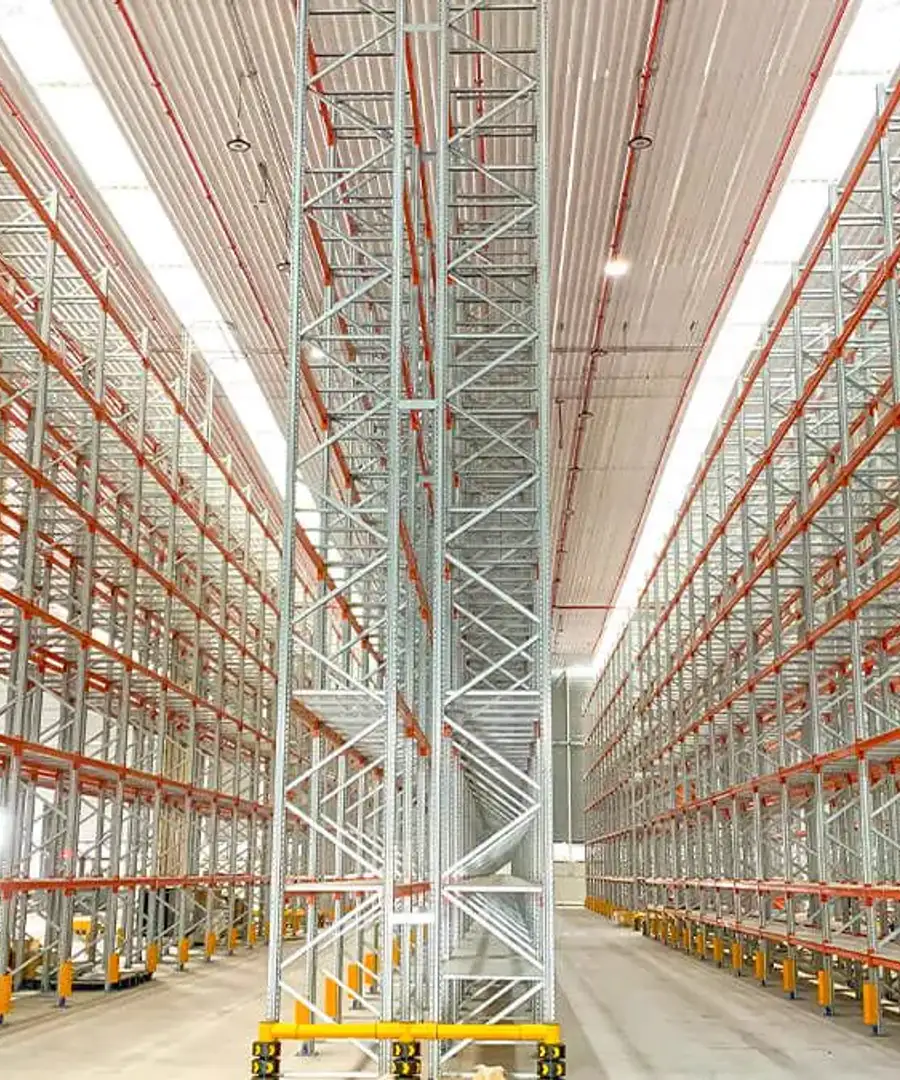
High-density storage that uses the height — ASRS systems (automated storage: the goods come to the operator on their own), stacker cranes (the machine that rises, lowers and travels between racking to store and retrieve pallets) and VLM towers (they store in a minimal footprint and bring the tray to the operator) — to store up to 3x more in the same meters, with no construction or relocation.
See high-density systems
02

You lose time and errors creep in

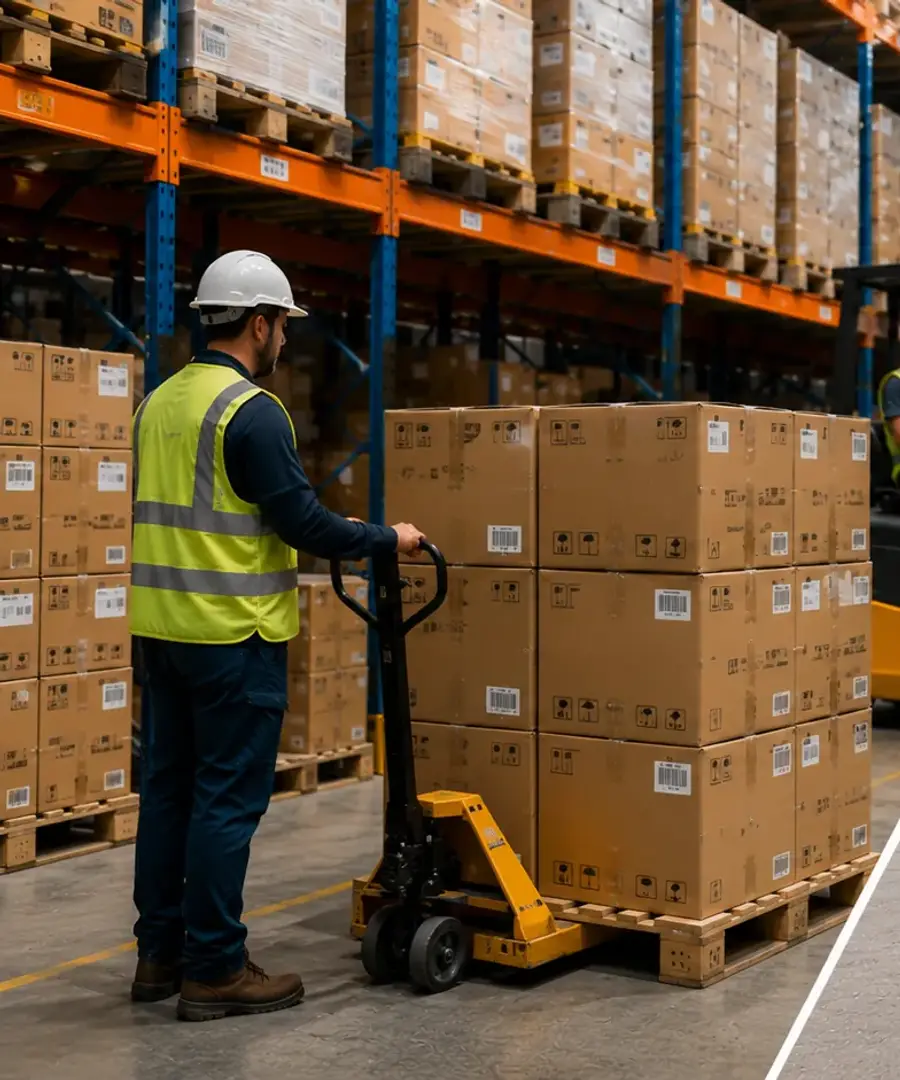
Operators walking kilometers looking for products, orders going out wrong, returns that cost money and customers. By hand, the warehouse is slow and makes more mistakes than it seems.

Robots that bring the goods to the operator and management software that records every move: fewer picking errors and less time lost walking.

See robotics and software
03

Costs are eating your margin

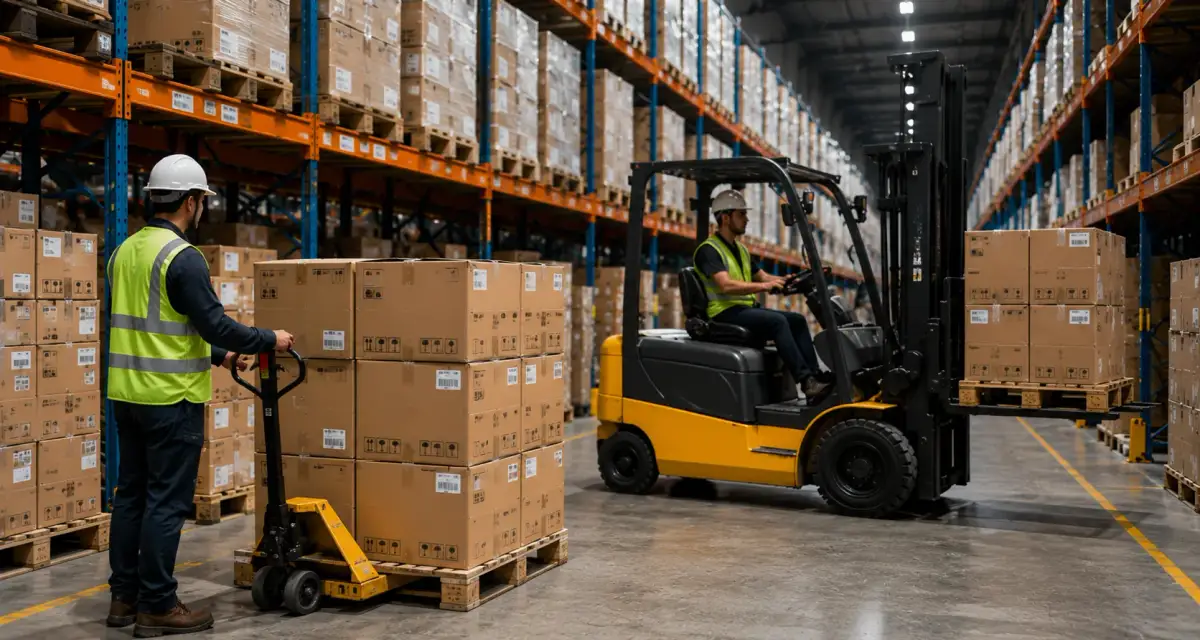
Rent rises, labor is increasingly expensive and hard to find, and immobilized stock is working capital sitting idle. The warehouse is usually the biggest hidden cost in the operation.

Automation lowers the cost per order structurally and, with the current tax benefits (RIMI, reduced tariffs), the return usually falls between 18 and 36 months depending on the case.

See how it pays for itself

Methodology

How we implement it

Our approach
  1. 01

    Diagnosis

    Survey of your current operation: flows, volumes, SKUs, demand peaks, and building constraints.

  2. 02

    Design

    Custom solution engineering: layout, technology selection, flow simulation, and projected ROI.

  3. 03

    Implementation

    Installation, integration with your existing systems, and startup with operational team training.

  4. 04

    Support

    Preventive and corrective maintenance, software updates and support from Argentina for projects across Latin America.

Get started

Ready to automate?

Our engineering team evaluates your operation and presents a custom solution at no cost.

Schedule free diagnosis

Why STOKA

Differentiating advantages

  • Direct factory access

    A single point of contact: STOKA resolves the equipment warranty and the original parts.

  • Engineering from Argentina

    A team of engineers in Argentina for design, implementation and after-sales support across Latin America.

  • Peso financing

    We structure each project with the financial tools available in the local market.

  • Full integration

    We connect the system to your existing ERP/WMS without interrupting operations.

Geographic coverage

Warehouse automation across Argentina

We work from our base in Mendoza for the whole of Latin America. These are some of the Argentine hubs where we already operate, but we reach any point in the country with ASRS systems, robots and management software with STOKA's engineering and support from its base in Mendoza.

Frequently asked questions

We answer your questions

How long does it take to implement an ASRS system?

It depends on scale. A medium system (5,000–20,000 positions) generally takes 6–12 months from contract signing to startup. Larger projects may require 12 to 18 months.

Do I need to change my ERP to implement an automated system?

No. Our systems integrate with the main ERPs on the market (SAP, Oracle, Microsoft Dynamics, etc.) through standard APIs. Integration is part of the project scope.

What happens if there's a power outage or technical failure?

The systems we integrate have emergency operation protocols, UPS, and optional generators. The WMS preserves inventory state and equipment automatically resumes from where they were.

Can you finance the project in Argentina?

Yes. We work with local financing tools: leasing, bank credit, and in some cases access to productive investment promotion lines.

What is Logistics 4.0?

Logistics 4.0 is the application of Industry 4.0 technologies —automation, IoT, artificial intelligence and data analytics— to warehouse operations and the supply chain. It lets warehouses, stacker cranes, robots and software communicate with each other for a connected, autonomous and self-optimizing operation. In practice, it turns a traditional warehouse into a smart warehouse.

How much space does an ASRS system save?

An ASRS system uses the height of the building —from 7 up to 40 meters— and eliminates the wide aisles forklifts require. In practice, a high-density automated warehouse can store up to 3 times more goods in the same square meter than conventional racking — and up to 5 times with 12 meters of height or more and a homogeneous product — freeing up space or avoiding a building expansion.

What is intralogistics?

Intralogistics is the set of material and information flow processes inside a warehouse or plant: receiving, storage, order picking and dispatch. Automated intralogistics —with stacker cranes, robots and management software— is the heart of smart logistics and the Warehouse 4.0.