
Building solves the space problem for a decade at a time, and it is genuinely the right answer in several cases. But it is also the option that ties up the most capital before a single pallet moves, and the one that consumes the most time while the operation carries on with the problem unsolved. This page compares both paths on cost and on timeline, the two dimensions where the difference is large, and says when building is what the situation calls for.
Should I build a new warehouse or densify the current one?
Densifying suits you when there is unused clear height: it is cheaper, far quicker and works on metres you already pay for. Building suits you when you already own the land, when projected growth exceeds what densification can deliver, or when the current building fails on location or structure.
What building costs, and what that figure leaves out
Value space using your own rent or property opportunity cost. Released space can support growth or reorganization; it only saves rent when an actual payment obligation is reduced.
Time, which is what gets underestimated most
This is the biggest difference between the two paths and the one that least often appears in the comparison. Densifying takes 3 to 4 months of installation from the purchase order, plus the engineering and manufacturing that come first. Building adds soil studies, design, municipal permits, occupancy approval and utility connections to the construction itself, and every one of those steps depends on third parties. Meanwhile the operation carries on where it is, with the same space problem that triggered the search: more movement hours, more errors from congestion, more goods in the aisles. That cost runs for the whole project and is rarely counted.
What happens to the current building
Building does not make the warehouse you already have disappear: you have to decide what to do with it. If you own it, it becomes an asset to sell or rent, and that income belongs in the calculation. If it is rented, check what the lease says about leaving early. And if the plan is to run both, then the space problem was not solved — operating costs were duplicated: staff, security, utilities, systems and movements between sites that add no value. That third option is the one that most often happens without ever being decided, simply because nobody closed the old building.
What densifying gives back on what is already built
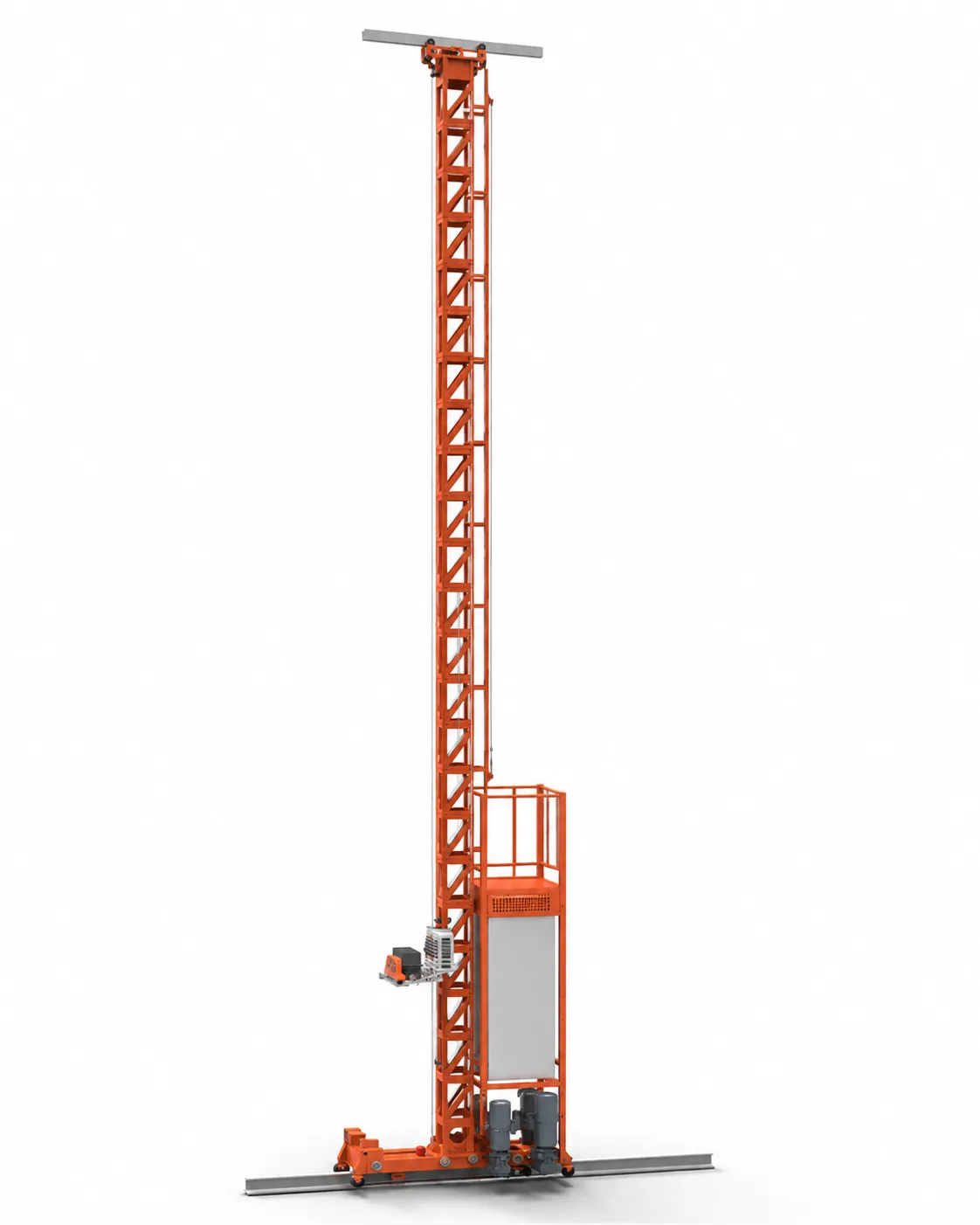
Densifying works on the building that already exists: storing upwards and removing the aisles a forklift needs. It can multiply what conventional racking holds by up to 3 times, and it also frees up to 66% of the floor for production, loading yard or growth. The honest comparison is not "new build versus system" but how many equivalent square metres each path gives back and at what cost per equivalent metre. Measured that way, densification usually wins comfortably, provided there is height to use; how much there is and what it yields is what the survey tells you.
When building is the right call
Building wins in four situations. When you already own the land, because the largest cost disappears. When projected growth exceeds what the maximum factor can deliver over the current floor area. When the current building fails on location — far from consumption or poorly connected — and the problem is where it is, not how much it holds. And when the existing building has structural limits that will not take more load or taller racking. In those cases the question is not whether to build, but with how much clear height, so as not to put a ceiling on the coming decade’s capacity.
Compare by equivalent metre and by timeline
The two questions that order the decision are how many equivalent square metres each path gives back, and how long it takes to give them back. With clear height available, densifying usually wins on both. Without height, or with growth that exceeds the 3x ceiling, building is what the situation calls for, and there the thing that matters is not repeating the mistake of building low. It is worth running both calculations in full, even when one of the two looks obvious from the start: the full comparison includes what happens to the current building, the cost of operating with the problem unsolved for as long as construction lasts, and the clear height the new building will leave available for densifying later. STOKA measures clear height and current positions at no cost, and if the numbers say build, we say build — including the height worth leaving.
Frequently asked questions
Value space using your own rent or property opportunity cost. Released space can support growth or reorganization; it only saves rent when an actual payment obligation is reduced.
Densifying takes 3 to 4 months of installation from the purchase order, plus the engineering and manufacturing that come before. Building adds soil studies, design, permits, construction, occupancy approval and connections, and every step depends on third parties.
The more clear height, the more you can densify later: the ceiling is multiplying what conventional racking holds by up to 3 times. Building low makes the square metre cheaper today and puts a ceiling on the following decade’s capacity.
Decide it explicitly: sell it, rent it or close it. Running both duplicates staff, security, utilities, systems and movements between sites that add no value. It is the option that most often happens without ever being decided.