
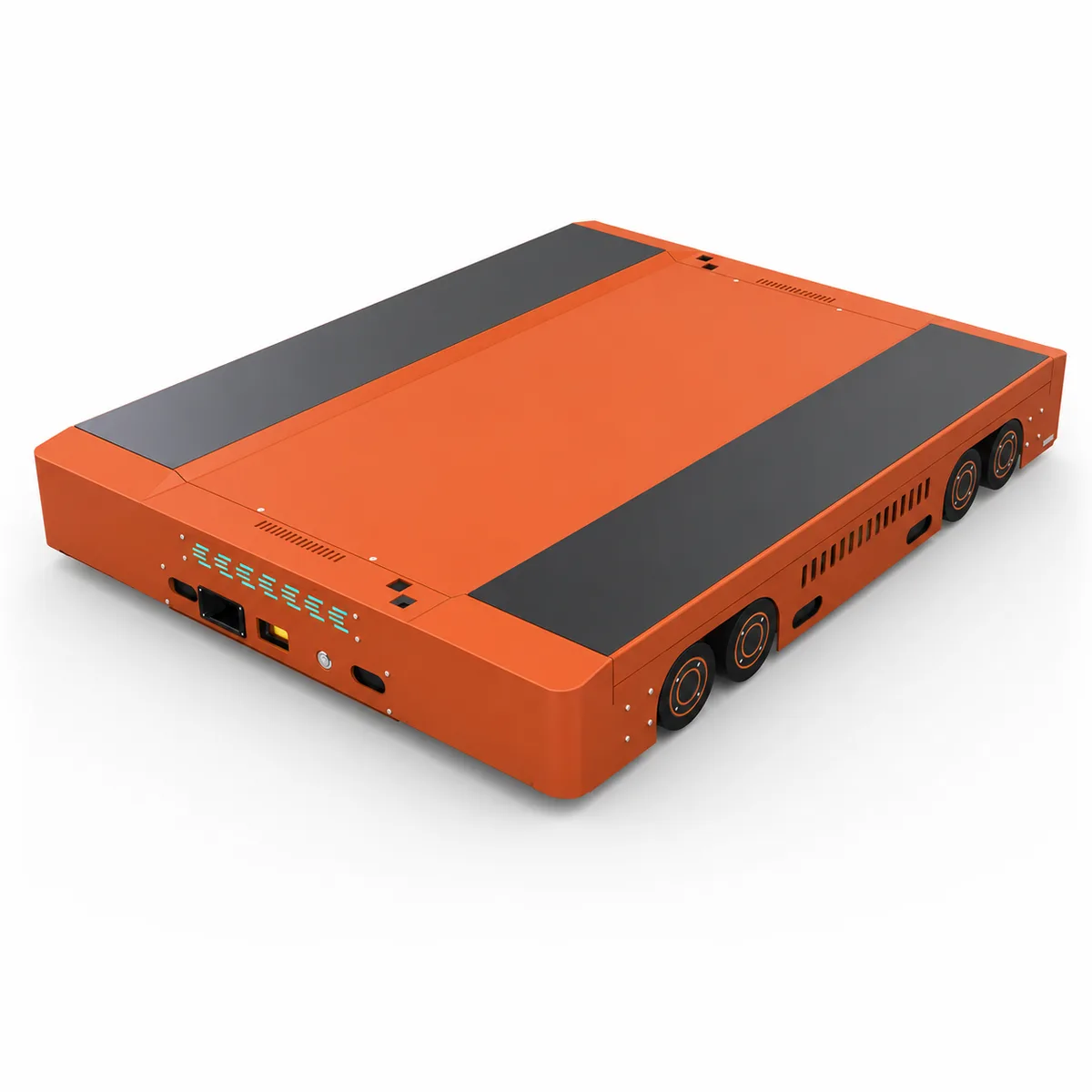
Cold does not prevent automation, but it changes almost everything: lubricants, electronics, what happens when equipment moves in and out of the chamber, and above all how long a person can stay inside. In STOKA projects, stacker cranes work down to −30 °C and shuttle robots down to −25 °C (STOKA criterion). Those two figures, set against the real temperature measured in your chamber, define which type of system fits and which does not. Here is what gets checked beforehand, how it is measured, and when the chamber you already have is solved without automating anything.
What changes when the warehouse works in the cold
A cold chamber is not an ordinary warehouse turned colder: it is an environment where every minute of open door costs energy, where humidity condenses and then freezes, and where the time a person can work inside is limited by regulation and by common sense. That pushes movements to be few, ordered and predictable. An automated system fits that logic well, because it needs no lighting, does not open doors unnecessarily and takes no breaks for temperature. But it also suffers: cold thickens greases, condenses water onto boards and punishes batteries. Cold storage design is therefore not the same design with a minus thirty degree sign above it. It is a different design, and it starts by measuring how cold it really gets and for how long.
How cold can an automated system work in?
With the equipment STOKA integrates, stacker cranes, the machines that travel the aisle between two racks and raise and lower the load, work down to −30 °C. Shuttle robots, which enter the rack itself to fetch a pallet or a carton, work down to −25 °C (both STOKA criteria). That gap matters when the chamber sits near the limit: a deep freeze chamber may fall inside stacker crane range and outside shuttle range, and that changes the whole layout. It is not a rule applied from memory: it is checked against the real temperature measured in your chamber, at the coldest point and the coldest moment of the cycle, not against the design value printed on an old drawing.
Lubricants, electronics and condensation
Three things change inside. First, lubricants: standard greases and oils thicken, raising consumption and wear, so low temperature formulations are specified for gearboxes, guides and bearings. Second, electronics: cabinets and drives do not live well at those temperatures, so they are placed outside the chamber or inside climate controlled enclosures, and cable routing is handled carefully because insulation turns rigid. Third, condensation, the most underestimated problem. Every time equipment or a load moves from the chamber into the anteroom, humid air condenses on cold surfaces, and that water later freezes onto guides, sensors and contacts. It is solved with properly designed anterooms, localised heating and a work sequence that avoids unnecessary thermal crossings.
Getting people out of the cold is a safety argument first
Value recovered time using your actual operating costs and measurements of the tasks that change. Distinguish time available for other work, reduced overtime and expenses that can actually be avoided.
What gets checked first: real temperature, cycles, humidity and transition
A cold survey measures four things. The real working temperature, logged over several days and at different points of the chamber, because it is almost never uniform and the value that matters is the coldest sustained one. The entry and exit cycles: how many times per shift the door opens, how much goods move in and out, and whether seasonal peaks change the regime. Humidity, which defines how much condensation and ice have to be managed. And how the thermal transition is solved today: whether there is an anteroom, how big, with what curtain or airlock, and whether goods wait there or pass straight through. That set, and not a catalogue, is what determines which system fits your chamber and how it is sized.
When the existing chamber is solved without automating
There are clear cases where robotics is not needed. If the chamber has low rotation and high volume of the same reference, organising by family and applying rotation rules such as FEFO, meaning first expired first out, usually cuts open door time more than any machine. If the problem is that people go in to look and cannot find, the fix starts with fixed, well signed locations and serious cycle counting. If the door opens too often because picking happens inside, moving that task to the anteroom changes energy consumption without buying anything. Process first: if after all that the bottleneck is still in the cold, then automation is worth looking at, with density up to 3x (STOKA criterion) and up to 66% of floor released.
How equipment is sized on the measured temperature
Sizing starts from the measured figure, not the published range. The real sustained temperature defines which equipment family fits, what lubrication and electronics protection it carries, where the cabinets sit, how the anteroom is resolved and what maintenance it needs. STOKA has a dedicated page for the cold storage shuttle robot inside the systems section, with the detail of that configuration. And as in any project the schedule holds: installation takes 3 to 4 months from the purchase order (STOKA figure), with the particularity that in cold storage the shutdown window has to be planned further ahead, because emptying the chamber or holding it at temperature during assembly is a decision taken before work begins.
In short: measure the cold first, choose the system second
Two figures you can actually use: stacker cranes down to −30 °C and shuttle robots down to −25 °C (STOKA criterion). Everything else comes from your chamber: real sustained temperature, door cycles, humidity and how the thermal transition is handled today. From that you define what fits, how it is lubricated, where the cabinets go and what maintenance it takes. And if the diagnostic shows the problem is one of order and process, the honest answer is to fix that first: robotics in the cold is justified when it takes people out of the cold and holds the flow, not by default.
Frequently asked questions
With the equipment STOKA integrates, stacker cranes work down to −30 °C and shuttle robots down to −25 °C (STOKA criterion). Which of the two applies depends on the real sustained temperature in your chamber, measured at the coldest point, and not on the design value written in the original documentation of the installation.
Because every time a load or a machine moves from the chamber into the anteroom, humid air condenses on cold surfaces and that water later freezes onto guides, sensors and electrical contacts. It is managed with properly sized anterooms, localised heating, protected enclosures and a work sequence that avoids unnecessary thermal crossings.
Not on its own. The first reason is occupational safety: sub zero work carries exposure limits, demands clothing that gets in the way and raises the risk of slips and fatigue driven errors. Productivity and the energy saved through less open door time come afterwards, as a consequence of having taken routine work out of the cold.
Four things: the real working temperature logged over several days at different points, the entry and exit cycles per shift with their seasonal peaks, humidity, and how the thermal transition between chamber and anteroom is handled today. That set defines which equipment family fits and how it is sized, far more than any catalogue sheet does.
It depends on the chamber and the scope, and it is one of the decisions taken before work starts, not along the way. The plan defines whether work proceeds by sectors, whether goods are consolidated in one part while the other is assembled, or whether a short shutdown suits better. Since installation takes 3 to 4 months from the purchase order, that window is scheduled well in advance.