
Almost every conversation about automating starts badly because it treats the three levels as a staircase: manual at the bottom, semi-automated in the middle, automated at the top and everyone climbing. It does not work that way. They are three different ways of running a warehouse, each with its own break-even point, and staying at the one that fits you is not settling: it is not overspending. This page describes what each level does in a real warehouse, what changes between them, and which questions place you at yours.
What is the difference between a manual, a semi-automated and an automated warehouse?
The difference is not the number of machines but who decides and who executes each movement. In a manual warehouse, a person decides where the goods go and takes them there. In a semi-automated one, the system decides and the person executes, or the other way round: equipment does the heavy lifting and people resolve whatever varies. In an automated one, the system decides and executes, and people supervise, feed and handle exceptions. All three can move the same volume; what changes is the cost per movement, how fast they react to a change and what happens on the day you are short of staff. That is why the right question is never which one is more modern, but which one your operation can sustain.
Well-organised manual: what it does and when it wins
A well-run manual warehouse has conventional racking, forklifts or stackers, locations under a single naming convention, a rotation criterion applied seriously and a management system that reflects what is on the floor. People walk or drive, and the decisions about where to store come from a written rule, not from the memory of whoever was on shift. It wins in three very concrete situations: when daily volume is low or highly irregular, when the goods are too uneven to have a standard load unit, and when the layout is going to change in the short term. It also wins when the real problem is order rather than capacity: reorganising a messy manual warehouse usually frees more square metres and more hours than any purchase, at a fraction of the cost. If you are in one of those cases, automating now means bringing forward an investment with nothing yet to pay it back.
Semi-automated: a legitimate destination, not a rung
Semi-automation combines people and equipment in the same flow, and that mix is a decision, not an intermediate stage. In a real warehouse it can look like this: high-density racking with remotely operated transfer carts, a conveyor moving cartons from the picking area to dispatch, vertical storage units for small parts while everything else stays on conventional racking, or barcode scanning on every movement with the software keeping the count. People still make the decisions that require judgement; the equipment takes the repetition and the effort. It holds up well when volume is steady but the product mix changes often, when very different products coexist, or when the seasonal peak is too high to size the whole year against it. Many operations stay here permanently and are right to: it is where investment and flexibility cross.
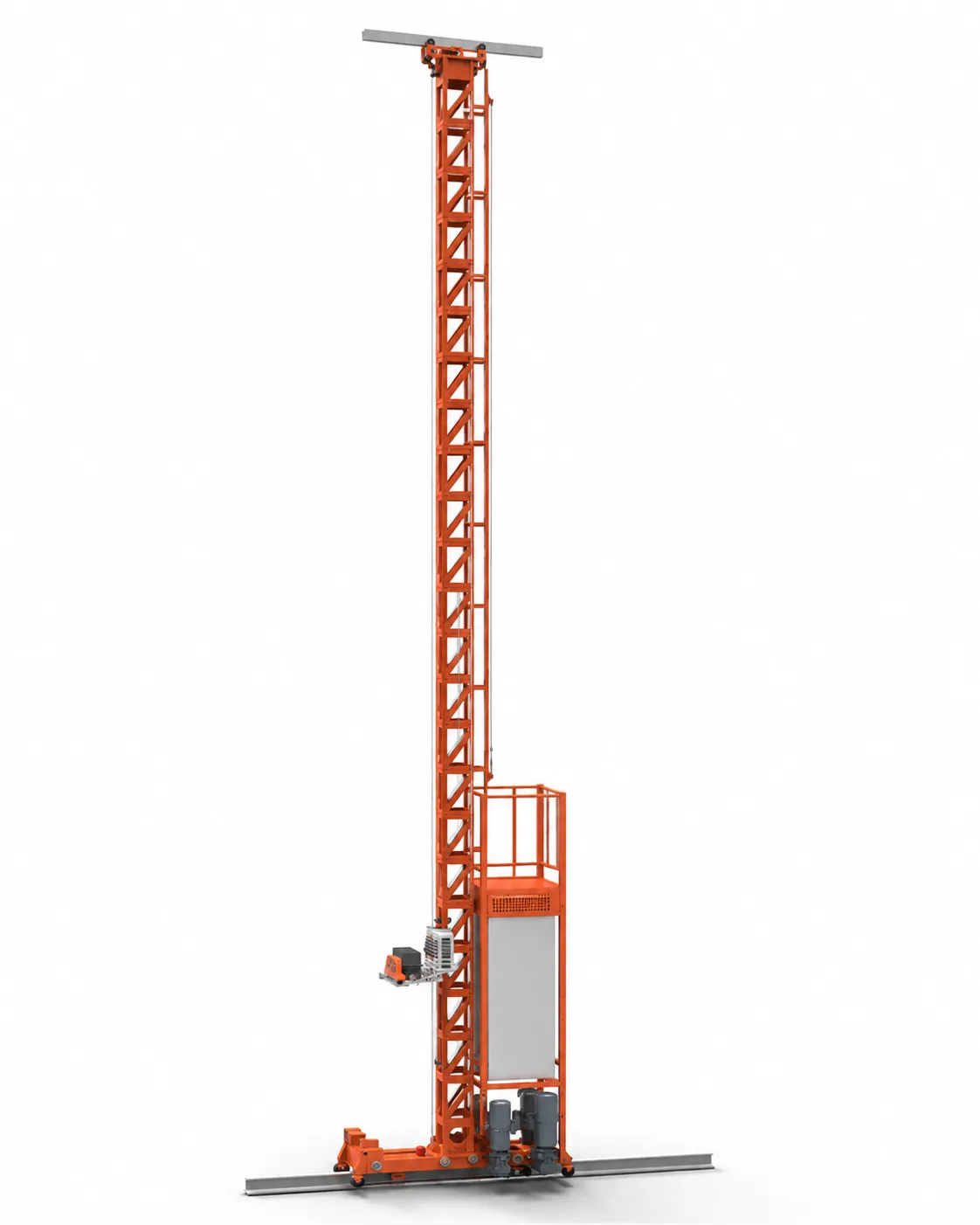
Automated: what it really solves and what it demands in return
Inventory accuracy is measured by comparing records with physical stock. Results depend on receiving and dispatch records, location rules, training and controls; software or robots do not guarantee an accuracy percentage.
What changes from one level to the next
Value recovered time using your actual operating costs and measurements of the tasks that change. Distinguish time available for other work, reduced overtime and expenses that can actually be avoided.
What happens when volume changes
This is the point that overturns the most decisions. A manual warehouse absorbs a peak by adding shifts or temporary staff: expensive per unit, but it switches on and off with the peak. A semi-automated one absorbs a fair amount without touching anything and covers the rest with people. An automated one has a designed capacity: below it there is slack, above it no amount of overtime will stretch it. If your operation grows steadily, that fixed capacity is an advantage, because cost per movement falls as it fills up. If it grows in unpredictable jumps, or if the peak is several times the average, the rigidity becomes a problem. That is why seasonality has to be on the table before you choose a level, not after signing.
The questions that place you at your level
Four questions are enough. Do you have a standard load unit that is respected every day, or is every package different? Is your daily volume even, or does the peak multiply the average? Will the layout stay the same over the next few years? And today, is the bottleneck capacity or order? If the goods are uneven, volume jumps or the layout is going to change, your level is well-organised manual or semi-automated, and there is nothing to regret. Automation pays off when all four answers point the same way.
Frequently asked questions
No. It is a level with its own break-even point, and many operations stay there permanently without losing anything. It combines equipment for the repetitive work with people for whatever needs judgement, and that mix is exactly the advantage when the product mix changes often or very different products coexist. Treating it as a rung leads to overspending too early.
When daily volume is low or highly irregular, when the goods are too uneven to have a standard load unit, when the layout will change in the short term, or when the real problem is order rather than capacity. In that last case, reorganising turnover, layout and location naming frees more space and more hours than any purchase, and costs far less.
It changes what people do more than it reduces how many people are needed. The system takes over the repetitive part —walking to find things, lifting, lowering, hauling— and people move to control, quality, exceptions and maintenance, where their judgment is worth something. How many positions are needed afterwards depends on each operation and comes out of the site survey, with its volumes and its shifts; there is no general number, and anyone who gives you one up front is guessing. What does change in every case is that the operation stops depending on two or three people remembering where everything is.
Installing a STOKA system takes 3 to 4 months from the purchase order, including manufacturing, shipping, assembly and commissioning. Before that comes survey and design, whose length depends on how well ordered the operation data is. An improvement within the manual level, by contrast, usually starts within weeks because it does not depend on manufacturing.
Yes, and it is the most common arrangement in real projects. The product family with stable volume and an even load unit gets automated, and the rest keeps operating manually. What has to be defined beforehand is the boundary: where one zone hands over and the other receives, under which document, and under a single location naming convention shared by both.