
When an automated storage system enters Argentina, it does not pay one duty: it pays several. Each component is classified separately under the NCM — the Mercosur Common Nomenclature, the code regional customs authorities use to identify every kind of goods — and the tariff treatment follows from that classification. That is why two similar systems can carry different customs clearance costs. Here we explain what the NCM is, why classification decides what you pay, why one system has components in different headings, and what role Decreto 513/2025 plays. STOKA imports and integrates; the classification is validated by the customs broker.
What the NCM is, in one sentence
The NCM is the system of numeric codes Argentina, Brazil, Paraguay and Uruguay use to identify every kind of goods crossing their borders. It is built on the World Customs Organization Harmonized System, so its first digits are the same ones used almost everywhere; the last ones belong to Mercosur and allow more specific products to be told apart. Each NCM heading carries a treatment: import duty, statistics fee, licensing regime where applicable, and any benefits or exceptions. In plain terms: the NCM is the label customs uses to decide what it is you are bringing in, and everything else hangs from that label.
Why classification decides what you pay
Import duty is not set by what the equipment does or by what the supplier invoice says: it is set by the tariff heading the goods end up classified under. The same asset can fall into more than one arguable heading depending on its main function, how assembled it is, its materials or the way it is presented for clearance, and each of those headings can carry a different treatment. That is why classification is not an administrative step after the purchase but a technical definition best settled before closing the deal. A poorly built classification brings two concrete risks: paying more than necessary, or paying less and later facing an adjustment with interest. Either way, the figure you budgeted stops being useful.
How much import duty does warehouse equipment pay?
There is no single answer, and be wary of anyone who hands you a percentage in passing. It depends on the heading each component is classified under, on the origin of the goods and on the regimes in force at the time of clearance. What you can do, and should do early, is ask for the proposal to come with an itemised component breakdown so your customs broker can pre-classify and estimate the full tax burden: import duty, statistics fee, VAT and advance collections, as applicable in each case. That estimate is what later turns into a reliable budget. STOKA delivers the technical and commercial detail that exercise needs; the final figure is put together by the broker under the rules in force on the clearance date.
Why one system has components in different headings
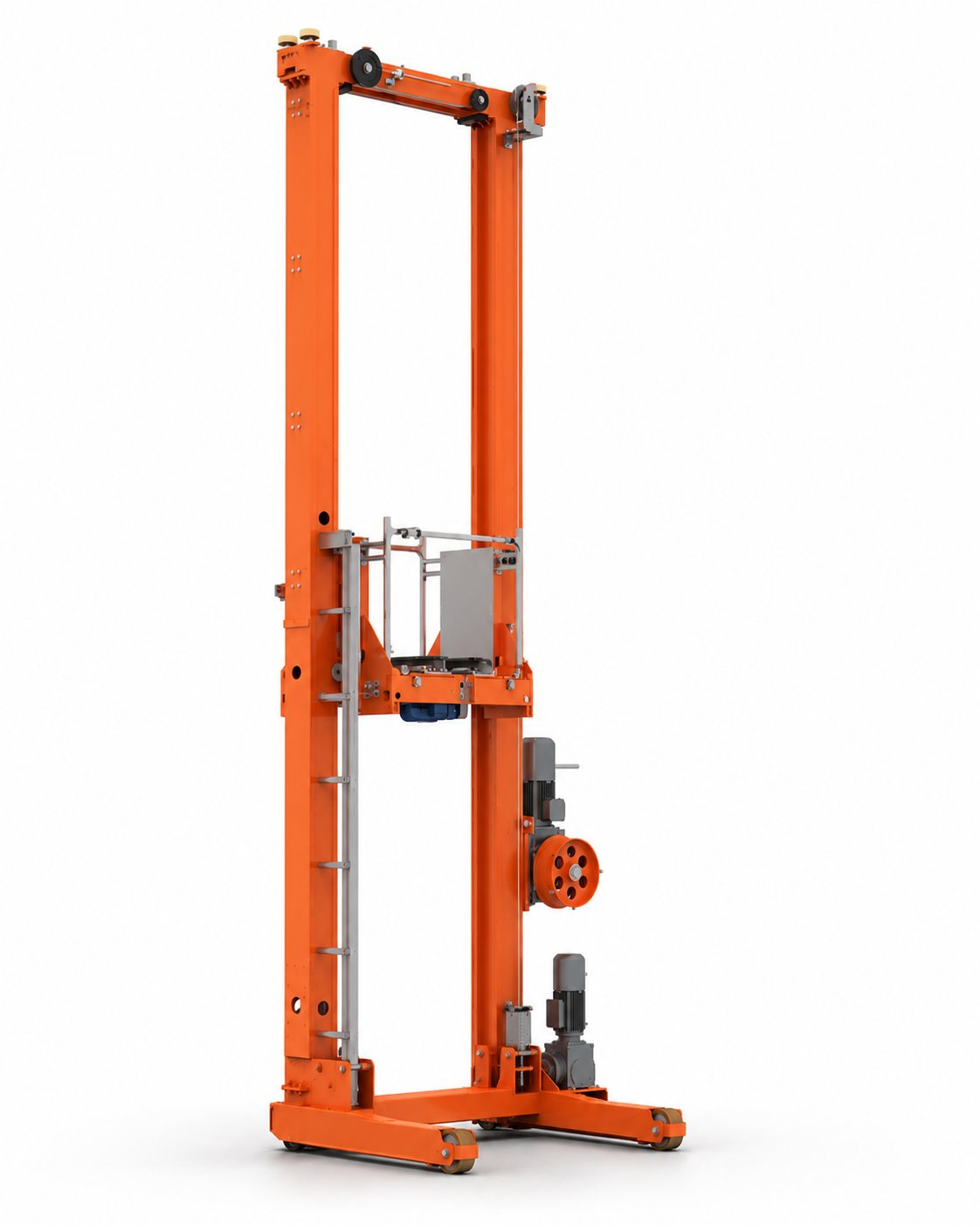
An automated storage system is not an object: it is an assembly. It can include racking structure, stacker cranes or shuttle robots, conveyors, motors and gearboxes, frequency drives, electrical cabinets, sensors and scanners, and the management software that coordinates it all. Those elements do not share a nature: the steel structure, the lifting machine and the electronic equipment are classified under different NCM chapters. The form of presentation matters too: importing a complete unit is not the same as bringing parts assembled on site. Since the system can reach 7 to 40 metres in height (STOKA criterion), the structure often weighs heavily in total value, and its tariff treatment can differ from that of the equipment moving inside it.
What role Decreto 513/2025 plays
Decreto 513/2025 sets a reduced import duty for certain capital goods, and it does so according to the NCM classification of each component. That is precisely why everything above matters: the benefit does not apply to the project as a block, nor to the equipment by its commercial name, but heading by heading. One system can have parts covered by the reduced duty and others that are not, and the difference between the two scenarios is settled in the classification. That is why it pays to involve the customs broker while the engineering is being defined, not once the goods are already at the port. Which headings are covered, and to what extent, follows from the text of the decree and its complementary rules: not something worth quoting from memory.
Who validates the classification and what STOKA does
The tariff classification is proposed and validated by the customs broker, the professional licensed to do it and the one answerable for the declaration before the authority. Where there is reasonable doubt about which heading an asset falls under, there are prior consultation mechanisms with the customs authority; the broker channels those too. STOKA plays a different and concrete role: it designs the system, imports it, installs it, integrates it with your management software and supports it, and delivers the technical documentation classification requires — component breakdown, data sheets, functional description, materials and weight. STOKA does not provide tax or customs advice: the specific treatment is confirmed by the broker and by your company tax adviser.
When import duty should not decide the project
Payback is calculated using the full investment and your operation’s net savings. Separate genuine expense reductions from capacity available for growth; freeing space or time does not automatically save cash.
The order that works
First define which system your operation needs and what savings pay for it. Then ask for the itemised component breakdown and take it to your customs broker so they can pre-classify and estimate the full tax burden. Only with that figure do you have a budget that holds. Installation takes 3 to 4 months from the purchase order (STOKA), so there is time to settle the customs side properly, without rushing and without surprises at the port. STOKA imports and integrates; the classification is validated by the broker and the tax treatment by your company adviser.
Frequently asked questions
NCM stands for Mercosur Common Nomenclature: the system of codes Argentina, Brazil, Paraguay and Uruguay use to identify every kind of goods crossing their borders. It rests on the World Customs Organization Harmonized System. The heading an asset is classified under determines its import duty, its licensing requirements and any benefits that may reach it.
STOKA delivers the component breakdown, data sheets and functional description needed for classification. The tax burden is calculated by the customs broker under the rules in force on the clearance date, because it depends on each component heading, on origin and on the applicable regimes. STOKA does not provide customs or tax advice.
Because an automated system is a set of assets of different natures: steel structure, lifting machines, conveyors, electronic components and software. The NCM classifies them under different chapters, and each one can carry its own treatment. The form of presentation also matters: a complete unit is not the same as parts assembled on site.
No. The decree sets a reduced duty for certain capital goods according to the NCM classification, that is, heading by heading rather than by project or by the commercial name of the equipment. One system can have components covered and others not. The specific scope is determined by the customs broker against the text in force.
While the engineering is being defined, not once the goods are at the port. Classification drives the clearance cost and, with it, the whole project budget. An early pre-classification lets you compare technical alternatives at their real delivered cost and avoids later adjustments with interest.