
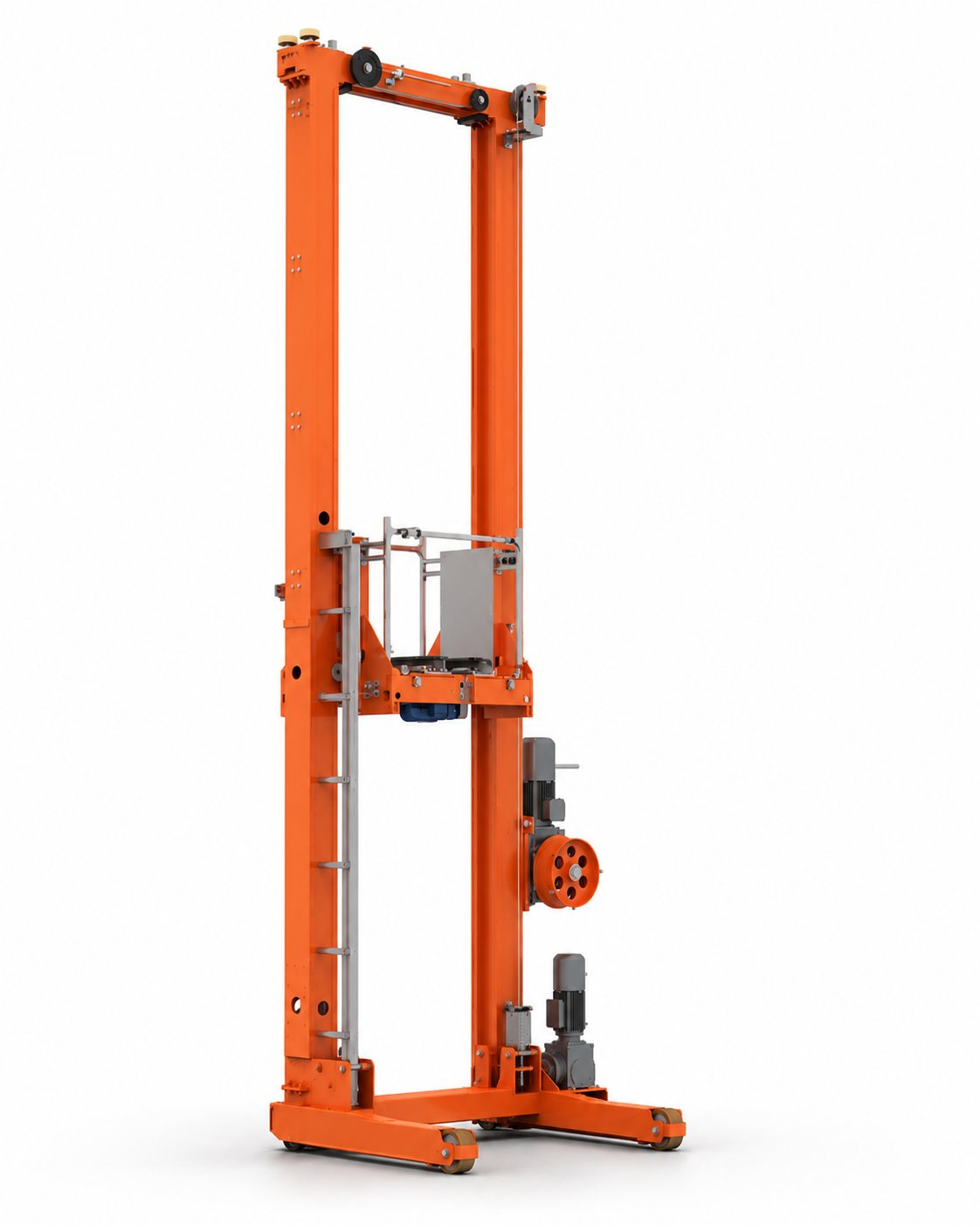
A warehouse holding flammables is not assessed against a list of minimums but against a list of verifications. What exactly you store according to its safety data sheets, how the zone ventilates, what happens if there is a spill, what ignition sources exist, what condition the electrical installation is in, how a fire is detected and put out, and whether at any moment you know what is there and where. This page walks through those verifications, says who signs each one, when it enters the project and what alternative appears when something falls short.
What do you need in order to store flammables in a warehouse?
There is no universal list of requirements, and it is worth distrusting anyone who hands you one. What is needed depends on what you store, in what container and in what building, and the specific framing is settled by your company’s health and safety officer together with the authority that grants the operating permit. The general framework in Argentina is Law 19,587 on Occupational Health and Safety and its Decree 351/79, and the classification of each product follows the Globally Harmonised System, GHS by its English acronym. Separation distances, maximum permitted quantities and fire resistance times are set by the applicable regulation and verified by a licensed professional: they do not come out of a catalogue. STOKA does not grant warehouse permits or certify installations: it designs, imports, installs, integrates and supports the equipment, and delivers it with the documentation the permit process requires.
It all starts with classifying what you store
Before looking at the building you have to look at the goods. Classification comes from the safety data sheet of each product — SDS by its English acronym — the document the manufacturer or importer issues, stating how the substance behaves, what it must not be stored with and what measures it demands. It is common to find warehouses where the item list does not match what is actually on the floor: products that changed supplier and formulation, new containers, items that arrived as a sample and stayed. That clean-up cannot be done by the equipment supplier; the company does it with its health and safety officer. Without that cleaned list, each item next to its data sheet, any later design rests on an assumption, and here assumptions are expensive.
Ventilation, spill containment and ignition sources
Three things are surveyed together on the building, because they affect one another. Ventilation: how the air in the zone is renewed, whether naturally or forced, and what happens to vapours, which depending on the substance gather low or high. Spill containment: whether the floor is sloped, whether there are bunds or trays, where a spill goes, and what happens if it also rains or if firefighting water is discharged. And ignition sources: motors, battery charging, forklift traffic, tools and hot maintenance work. The specific values for each of those verifications are set by the regulation according to what is stored and calculated by a licensed professional. What the survey has to do is record what exists today, who measured it and on what criteria.
The electrical installation is where most projects stall
It is worth looking at early, because it holds two different questions. The first is about safety: if the zone is classified as carrying a risk of explosive atmosphere, equipment working inside it has to be suitable for that classification, and it is the electrical designer together with the health and safety officer who define the area classification, never the supplier. The second is about availability: contracted power, switchboard condition, earthing, protections and voltage quality. An automated system is a new and sustained electrical load, and in many warehouses the incoming supply was sized for another era. If the electrical survey is left to the end, it arrives as a surprise and stalls the works; if it is done at the start, it is a task scheduled in parallel that delays nothing.
Detection, suppression and knowing what is where
Inventory accuracy is measured by comparing records with physical stock. Results depend on receiving and dispatch records, location rules, training and controls; software or robots do not guarantee an accuracy percentage.
Who verifies each item, and when in the project
Every verification has an owner and a moment. Classifying the goods comes first, and the company does it from the safety data sheets. Area classification and the electrical design come before the equipment is defined, and the electrical designer signs them. The detection and suppression design runs in parallel with the layout, signed by its own designer. The overall framing and the submission to the authority sit with the company’s health and safety officer, who handles the permit. STOKA comes in after classification and before the final layout: it designs the system with those constraints already on the table and supplies the technical documentation on the equipment that those submissions need. Since installing a system takes 3 to 4 months from the purchase order, the verifications that depend on third parties are better started early rather than late.
What if something falls short, and why getting people out weighs more here
Value recovered time using your actual operating costs and measurements of the tasks that change. Distinguish time available for other work, reduced overtime and expenses that can actually be avoided.
The sequence matters more than the equipment
First the classification of what you store, with its safety data sheets up to date. Then the survey of ventilation, containment, ignition sources and the electrical installation, each signed by whoever it belongs to. Only then the layout, and only if the diagnosis calls for it, automated equipment. If a verification falls short, the answer is a different alternative, not a disqualification. STOKA surveys the warehouse in that sequence, says honestly where you stand, and delivers the equipment with the documentation the permit process requires.
Frequently asked questions
It depends on what you store, in what container and in what building. There is no universal list: the framing is settled by the company’s health and safety officer, within Law 19,587 and its Decree 351/79, and verified by the authority that grants the permit. Distances and quantities are set by regulation, not by a catalogue.
A licensed health and safety professional, together with the electrical designer for the area classification and the fire designer for detection and suppression. The company handles the permit before the relevant authority. The equipment supplier provides technical documentation but does not certify the installation.
Yes, provided the equipment is suitable for the classification of the area where it will work, as defined by the electrical designer. Automation is designed after the goods have been classified and the electrical survey is done, not before. If those steps are missing, any equipment proposal is guesswork.
The alternative changes, it does not disqualify you. It may be better to concentrate flammables in a smaller, properly resolved zone, to solve containment locally, or to densify upwards to free floor and separate families without building. The survey says which of those routes is shortest in your case.
Because exposure is the risk productivity does not offset. Every hour an operator does not spend inside the classified zone is exposure that does not happen, and that argument weighs more than any cycle-time gain. It is why automation is assessed differently in this kind of warehouse than in a conventional one.